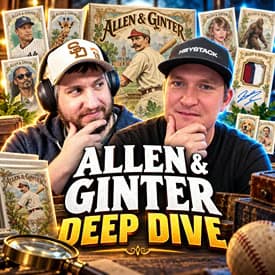
If you’re opening 2025 Topps Allen & Ginter, you’re probably not looking for a simple, predictable rip. You’re looking for the weird stuff, the throwback design, the minis, the rip cards, and the kind of checklist that can go from Aaron Judge to a reality TV star in the same box. This deep dive covers what’s in the product, which cards stand out, and how to approach Ginter without expecting it to deliver the same experience as a typical baseball release.Allen and Ginter has always been one of the most distinctive releases in the hobby. This year keeps that identity intact while adding some notable upgrades: stronger-looking autograph and relic offerings, less Chrome content, and plenty of unusual chase cards. If you’re deciding whether to rip, buy singles, or wait for Allen and Ginter X, here’s what to consider.
What Makes Allen and Ginter Different?
Allen and Ginter isn’t a typical baseball product—and that’s exactly why collectors come back to it.At its core, it’s a set-collector release built around a classic, old-time card design. You get a large base checklist, minis, oddball inserts, and plenty of cards that have nothing to do with baseball. That mix is the appeal: alongside baseball stars, you might find celebrities, musicians, athletes from other sports, and cards about unexpected objects, places, or ideas.That unpredictability makes Ginter stand out. You could pull Shohei Ohtani, then flip to a card featuring Anne Hathaway, Steve Burns, or a “50 Ways to Say Hello” mini. It can also be a fun product to open with someone who isn’t deep into the hobby: recognizable names and quirky inserts make it easy to enjoy the cards together.There’s a reason breakers sometimes describe Ginter as a bit of a slog, though. You’re not opening it because every pack is loaded with numbered hits. You’re opening it for the experience. If your main goal is to make your money back, Ginter may not be the best place to start. If you want a playful, unpredictable rip, it has plenty to offer.
Base Set, Chrome, and Mini Cards
The base set is where Allen and Ginter’s range starts to show.This year’s base checklist has 300 cards, mixing veterans, rookies, and legends. The design sticks to the classic Ginter look: portraits, vintage framing, and a layout that feels different from modern, action-focused cards.The rookie class provides plenty to chase, but the base set isn’t built around a single standout rookie. Its appeal is in the breadth of the checklist and the set-building experience.Chrome is a tougher chase this yearOne notable change is that Chrome cards appear to be considerably less common. In the discussion, the hosts cited an estimated 70% reduction in the Chrome print run compared with prior years. That could make these cards feel more scarce, but it also means completing the Chrome checklist may be difficult. For many collectors, buying singles could be the most practical way to finish a set.The Chrome base variations have a shortened 100-card checklist, including major names and top rookies. The hosts estimated around two Chrome cards and one refractor per box on average, making them meaningful pulls rather than routine pack contents.Minis remain a signature featureMini cards are one of the clearest signs that you’re looking at Allen and Ginter. The product includes regular mini base cards, Chrome minis, stained glass minis, metal minis, and different back variations.Check the backs carefully. Brooklyn back and no-number variations can be easy to miss, and some are especially scarce. A quick look at each mini could help you spot a variation hiding in plain sight. Some mini versions, including wood cards, are one-of-ones.
The Weird and Wonderful Inserts
This is where Ginter leaves the familiar world of baseball cards behind.The checklist includes baseball-themed inserts, celebrity cards, and concepts that are delightfully unexpected. This year’s examples include:
50 Ways to Say Hello
Mini Musical Methods
Uniform Countdown
Wicked Pow
Career milestone cards
Tin type variations
“50 Ways to Say Hello” features the word “hello” in different languages. The musical methods insert spotlights ways to listen to music, from jukeboxes and record players to headphones and smartphones. Uniform Countdown focuses on players with notable uniform numbers.These offbeat ideas are part of what makes Ginter feel different year after year. Even if a particular insert isn’t for you, the sheer variety gives the set its personality.Celebrity and non-baseball cardsThe non-baseball checklist is another major draw. The hosts mentioned names such as Rob Lowe, David Spade, Jerry Seinfeld, Anne Hathaway, Moby, Steve Burns, Nelly, Patrick Stewart, and Tim McGraw, alongside people from reality TV, music, acting, and other sports.These cards can attract collectors beyond the usual baseball audience. And “non-baseball” doesn’t always mean “non-sports”: the checklist can include athletes from other sports, too.
Rip Cards, Relics, and Autographs
For collectors focused on chase cards, the hits are a major part of the conversation. The hosts noted that the advertised box hits include autos, relics, or rip cards, and said the checklist suggests a stronger autograph and relic lineup than in previous years.Rip cards: keep them sealed or take the gamble?A rip card is designed to be opened, revealing a mini card inside. That mini could be a base card or something more special, such as an autograph or another variation. The tradeoff is part of the excitement: you may sacrifice a valuable card on the outside and find a modest card inside—or uncover a great surprise.Some collectors choose to keep a strong player’s rip card sealed or sell it to someone who wants to take the gamble. Others enjoy ripping, especially when the card is for their personal collection. Double rip cards add another layer of suspense, with two cards inside.Relics have some standout formatsThe lineup card relics are among the most distinctive options. They use pieces of actual game-used lineup cards, including the player’s name, instead of relying only on a familiar swatch of material. The checklist also includes framed, full-size, and mini relics.The hosts described the relic offerings as an improvement over the usual feeling that a relic is simply a hit to get past on the way to an autograph. Lineup card pieces and other unusual formats give collectors something more specific to look for.Autographs bring a strong checklistThe autograph checklist spans current stars, rookies, legends, and non-baseball personalities. Names discussed include Bobby Witt Jr., Aaron Judge, Shohei Ohtani, Mike Trout, Juan Soto, James Wood, Roman Anthony, Barry Bonds, Ichiro, Mariano Rivera, and Randy Johnson.A few formats particularly caught the hosts’ attention:
Autograph relic cards:
The hosts highlighted the on-card signatures paired with relics as a meaningful upgrade.
Carde de Visite autographs:
Vintage-inspired portrait cards with a distinctive look.
Mini framed autographs:
A classic Ginter-style hit, built around a mini card in a frame.
Non-baseball autographs:
Celebrity and crossover signers add another kind of chase.The hosts described Carde de Visite autos as especially striking, though very rare. The checklist also includes cut signatures and multi-autograph cards, which bring their own appeal for collectors who enjoy unusual, high-end pieces.
Should You Rip Allen and Ginter or Buy Singles?
It depends on what you want from the product.If you enjoy variety, nostalgia, and oddball inserts, Allen and Ginter can be a fun rip. It offers plenty of cards per box and enough unusual content to keep the opening entertaining.If you’re focused on value, be selective. The hosts cautioned that Ginter may not return the box price in a straightforward way, particularly if you’re expecting a traditional rookie-heavy release. Buying singles can be a more direct way to collect the cards you want—especially Chrome cards, numbered minis, or specific celebrity and autograph cards.The hosts also recommended keeping Allen and Ginter X in mind. They described it as an often-overlooked offshoot with a black-paper design, typically lower-numbered cards, and framed mini autographs. If you prefer that look and are focused on singles, it may be worth comparing with the main release.The short version: rip Ginter for the fun and variety; consider singles if you have specific cards in mind.
Frequently Asked Questions
What is Allen and Ginter known for?Allen and Ginter is known for its vintage-style design, mini cards, unusual inserts, non-baseball subjects, and distinctive chase cards such as rip cards and lineup card relics.Are Allen and Ginter boxes worth it?They may be worth it if you enjoy the rip experience. The hosts noted that the product may not be a straightforward way to recoup box cost, so it’s best approached as a fun, unpredictable release rather than a guaranteed value play.What are some cards to look for?Cards discussed as notable chases include rip cards, mini variations, autograph relics, Carde de Visite autos, Daguerreotype cards, tin type variations, and non-baseball autographs.Does Allen and Ginter include only baseball players?No. The checklist also includes other athletes, celebrities, musicians, reality TV personalities, and subjects unrelated to sports.What is Allen and Ginter X?Allen and Ginter X is an offshoot of the main release. The hosts described it as featuring a black-paper design and typically lower-numbered cards, with framed mini autographs.
Summary:
Allen and Ginter combines vintage design, quirky inserts, minis, celebrity cards, and rare hits into a distinctive rip. Its charm is the experience and variety—not a promise of easy value.