If you’re looking at
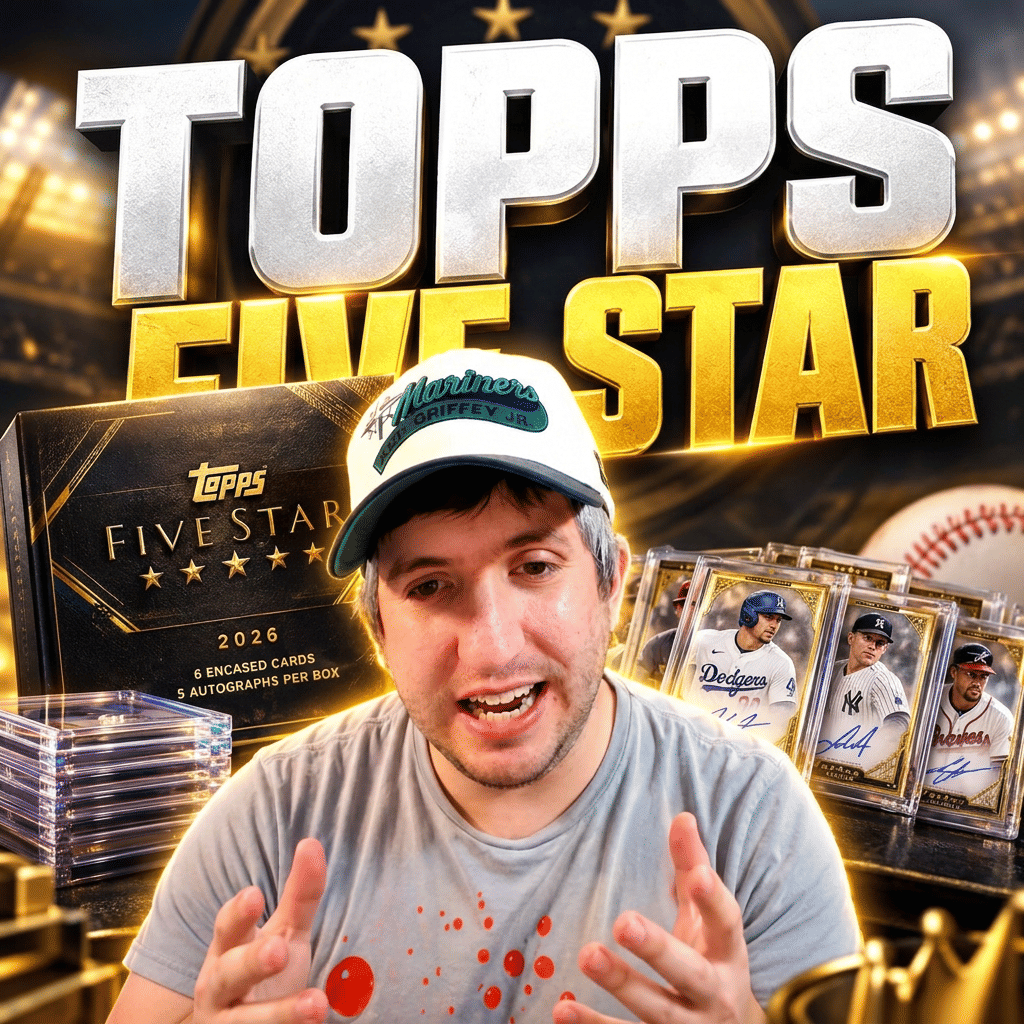
2026 Topps Five Star Baseball
and wondering whether it’s worth the chase, the short answer is: it’s a premium product with a premium price, and the value is mostly in the hits—not the box price. This release has moved up into the high-end tier, with six encased cards per box, five autographs, and one base card. Here’s a breakdown of the checklist, the biggest chase cards, the odds, and why this may be a better break product than a box to rip yourself.
What Makes 2026 Topps Five Star Baseball Different?
Topps Five Star has moved up from a mid-tier product to the high-end side of the market, where collectors expect limited print runs and sought-after autographs.Each box contains
six encased cards
: five autographs and one base card numbered to 50 or less. It’s built around hits, but that doesn’t guarantee a return equal to the box price.The cards use thicker paper stock rather than chrome, with gold and silver foil accents. That design gives the set a premium look, though the thicker stock may make grading more challenging.
The Base Checklist: Strong Names, But Not the Main Chase
The 100-card base checklist includes legends, current stars, and rookies, including Shohei Ohtani, Derek Jeter, Babe Ruth, Ted Williams, Mike Trout, Paul Skenes, James Wood, Jackson Merrill, and Aaron Judge.Base-card parallels include:
Base numbered to
50
Amber to
25
Emerald to
15
Onyx to
10
Ruby to
5
Foil Fractor
1/1
The checklist has plenty of recognizable names, but with only one base card per box, autographs are the main attraction.
Autographs to Watch For
Five Star Active AutographsThese are among the more common autograph cards and feature active players and rookies, including Bobby Witt Jr., Paul Skenes, Roman Anthony, Nick Kurtz, Jackson Chourio, Wyatt Langford, Gunnar Henderson, and James Wood. The base versions are numbered to 199, with additional parallels.Five Star Retired AutographsThe retired checklist brings in legends such as Derek Jeter, Cal Ripken Jr., Chipper Jones, Randy Johnson, Frank Thomas, Wade Boggs, Roger Clemens, Willie Mays, Mickey Mantle, and Mariano Rivera.Specialty AutographsThe release also includes Apex Autos, Golden Graphs, Leaderboard Legends, Stars and Stitches, Silver Signatures, Baseball Royalty, and dual autograph cards.Baseball Royalty stands out for its horizontal, framed look and gold foil around the autograph. The checklist features names such as Ohtani, Judge, Witt, Harper, Griffey Jr., Trout, and Jeter.One of the biggest headline cards is the
Welcome to the Club dual autograph featuring Ohtani and Barry Bonds
.
Rare Cards and Big Chases
The set also includes quintuple relic autographs, triple autographs, Rookie Cat Patch Autographs, cut signatures, and one-of-one image variations.Rookie Cat Patch Autographs feature special patch designs tied to events such as Jackie Robinson Day, Armed Forces Day, Independence Day, Play Ball Weekend, and Players Weekend. They’re one-of-one cards, making them difficult pulls rather than expected box hits.Cut signatures add another unpredictable element, with baseball figures and names from outside the sport on the checklist. These rare cards are part of the product’s appeal, but they shouldn’t be treated as likely outcomes from a box or two.
Should You Buy a Box, Join a Break, or Buy Singles?
With boxes expected to cost
more than $1,000
, Five Star is a significant purchase. A strong checklist doesn’t eliminate the risk of opening a box that doesn’t deliver a card you want.A practical order to consider is:
Player breaks
Singles
Ripping a box
Player breaks let you focus on specific players and can be a more targeted way to participate. Singles let you choose the exact card or player you want. If you do buy a box, it’s best to approach the rip as entertainment rather than a guaranteed way to get your money back.The thicker paper stock is also worth considering if you plan to grade cards. Be selective, and inspect condition carefully.
What Collectors Should Keep in Mind
The price is high.
A box costs more than $1,000, so the potential downside is significant.
The checklist is strong but varied.
There are major names, but not every autograph will have the same appeal.
The biggest chases are very rare.
Treat one-of-ones and special patch cards as exciting possibilities, not expected pulls.
Player breaks and singles offer more focus.
They may be a better fit if you have a particular player in mind.
Frequently Asked Questions
How many autographs are in a box?Each box has
five autographs
and
one base card
.Is Five Star a good product for grading?The thicker paper stock may make grading more challenging than with chrome cards. Consider the condition and the specific card before submitting it.What are some of the biggest chase cards?The Ohtani and Barry Bonds dual autograph and the one-of-one rookie patch autographs are among the headline chases.Is it better to buy a box or join a break?For collectors looking for a specific player, a player break or buying singles may be a more targeted choice than purchasing a full box.
Bottom Line
2026 Topps Five Star Baseball is a premium release with five autographs per box, a broad checklist, and some major chase cards. But with a box price north of $1,000 and rare hits that are difficult to pull, it may make more sense to focus on player breaks or singles than to rip sealed wax.